
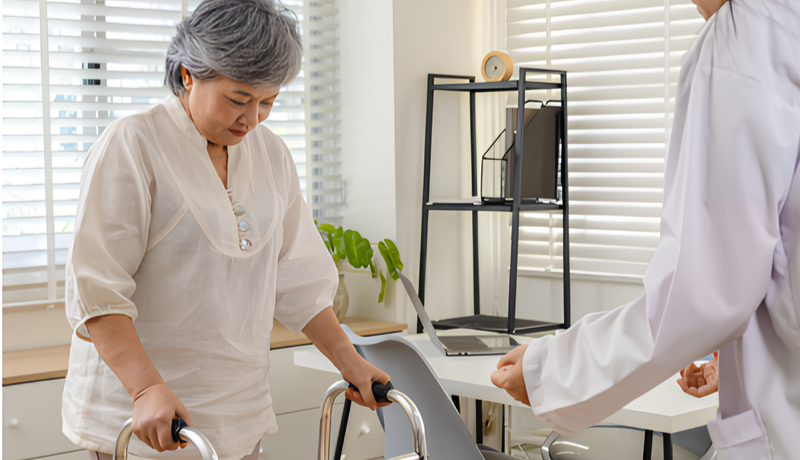

After a hip surgery, physiotherapy helps patients rebuild strength, movement and confidence step by step. Photo: Getty Images
Hip pain can be easy to dismiss as part of getting older. But when it becomes harder to walk, climb stairs or get around comfortably, it may be a sign that the joint is badly damaged.
In seniors, hip replacement is often needed after a fracture, but it may also be an option when severe arthritis or joint damage makes daily life too painful, says Dr Hitendra K. Doshi, orthopaedic and trauma surgeon at Mount Alvernia Hospital.
Here, he explains more about the treatment and recovery process.
Q: What is a hip replacement, and when is it recommended?
A hip replacement is a surgical procedure to replace a damaged hip joint with an artificial one. Depending on the problem, the surgery may be partial or total. A partial hip replacement addresses only the ball part of the joint, while a total hip replacement covers both the ball and the socket.
When an elderly person has a hip fracture after a fall, surgery is usually done as soon as the patient is medically fit, to reduce the risk of complications such as bedsores, chest infections, urinary tract infections and confusion.
Surgery may also be recommended in patients with osteoarthritis when hip pain, stiffness and reduced movement start to affect daily life, and when treatments such as medicine, physiotherapy or walking aids are no longer enough.
Seniors with hip fractures often undergo a partial hip replacement – a quicker operation with fewer possible surgical complications. But if the hip joints are damaged – for example, by severe arthritis or avascular necrosis, where poor blood supply damages the bone – a total hip replacement may be more suitable because both parts of the joint are affected in contrast to hip fractures.
Some surgical risks include bleeding, nerve injury and heart-related complications during or after the operation. Doctors reduce these risks through careful surgical techniques and medications.
They also ensure that existing health conditions are well managed and that any infections are cleared before surgery.
Q: What does recovery look like after hip replacement surgery?
With today’s pain control methods, most seniors can sit up and get out of bed soon after surgery, and start gentle weight-bearing exercises early. They are also given antibiotics and encouraged to start moving as soon as it is safe, as this helps lower the risk of infection, stiffness and blood clots. Physiotherapy is also an important part of recovery, helping the elderly regain strength, movement and confidence.
Many can walk independently without aids in about six weeks, although this depends on how mobile and independent they were before surgery.
Q: How can families and caregivers support seniors during recovery?
Family and caregiver support can make a big difference after hip replacement, especially in the early days. Their encouragement can help seniors stay motivated with rehabilitation and regain confidence in moving around again. Caregivers can also make sure the elderly follows the doctor’s advice, including wound care, medicines and follow-up visits.
Supporting early movement and physiotherapy is important too, as this helps reduce the risk of complications and supports recovery.
It is also important to watch for warning signs such as fever, increasing pain, swelling or redness around the wound, especially in very elderly patients who may need closer monitoring during recovery.
Source: The Straits Times © SPH Media Limited. Permission required for reproduction.
