June marks Men’s Health Month, a timely reminder for men to prioritise their health. In Singapore, prostate cancer is the most common cancer among men. The risk of prostate cancer increases with age and is more common in men aged 50 and above. Men with a family history of prostate, breast and ovarian cancer may also have a higher risk. For many men, prostate cancer develops slowly and may not cause any noticeable symptoms in its early stages. This is why early detection can make a significant difference to treatment outcomes.
What is the prostate?
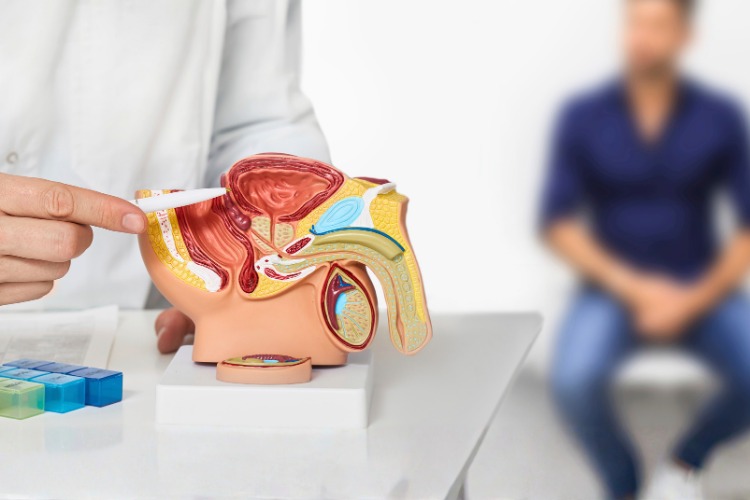
About the size and shape of a walnut, the prostate is a small gland in the male reproductive system that helps produce semen.
Prostate cancer occurs when abnormal cells in the prostate gland grow uncontrollably and form a tumour. In its early stages, the cancer is often confined to the prostate and may not cause any noticeable symptoms.
Signs and symptoms of prostate cancer
These symptoms do not always indicate prostate cancer, but they should be evaluated by a healthcare professional:
What can I do to reduce my risk of prostate cancer?
While recognising the signs is important, healthy lifestyle habits may help to reduce the risk of developing it. This includes:
The stages of prostate cancer
Prostate cancer is typically classified into stages based on the size of the tumour, if any lymph nodes have been involved in the cancer, and if the cancer has spread to the other parts of the body.
The stages of prostate cancer are:
Advances in prostate cancer treatment
Treatment for prostate cancer has advanced significantly in recent years, giving patients access to more precise and personalised treatment approaches.
One such advancement is theranostics, an emerging approach that combines diagnostic imaging with targeted therapy to identify and treat certain cancers. For suitable patients with advanced prostate cancer, Lutetium-177 PSMA is one example of a theranostic treatment that may help target cancer cells while minimising damage to surrounding healthy tissue.
Through Icon Cancer Centre at Mount Alvernia Hospital, patients can now access theranostics services as part of a comprehensive cancer care journey. As the first introduction of theranostics at Mount Alvernia Hospital, this milestone expands access to advanced and personalised cancer treatment options for suitable patients.
This Men’s Health Month, don’t ignore the signs. Speak to our doctors about prostate cancer screening, early detection and the treatment options available to you.
Article contributed by Dr Shang Yeap from Icon Cancer Centre located at Mount Alvernia Hospital.